
Practical Access-Control Policies for Protecting Library User Data
Introduction
A library’s privacy policy is tested by everyday decisions: who can view a borrowing history, change an account or export a list of patrons? The answers determine whether library data privacy protections work in practice or remain promises on paper.
Access control defines who can reach sensitive information, what they can do with it and how their access is reviewed. A clear approach to library data privacy does not make routine work harder; it ensures that convenience does not lead to unrestricted access.
Like a sports team, a library needs clear roles, good communication and a plan for difficult situations. The risks are different: an account might be misused, a staff login might grant too much access, or a temporary exception might remain in place long after it is needed. Clear security policies help staff protect library data privacy and respond consistently when problems arise.
The teams and players
Staff responsibilities vary. A circulation employee may need to check whether an item is overdue, while a systems administrator may need to manage accounts and permissions. Giving both the same access to patron records is easy to set up, but it may give people more information than their jobs require and put library data privacy at risk.
Role-based access is a practical starting point. Permissions are grouped by duties—such as circulation, reference, administration or technical support—and assigned to staff who need them. This is easier to explain and audit than a long list of individual exceptions. The roles should reflect current work, not an outdated organization chart, and support library data privacy.
Least privilege means giving each account only the access needed for its current purpose. This least-privilege access approach supports library data privacy: staff might be able to view an account without being able to edit it, while bulk exports are restricted to a small, approved group. Permissions should not build up just because someone once covered another desk.
Patrons also need secure access to their accounts. User authentication should confirm that users are accessing their own information without making routine use unnecessarily difficult. Libraries can set safeguards to suit the sensitivity of each service, protect credentials and provide a clear way to recover an account, all in support of library data privacy.
Vendors and connected services also belong in the access-control plan. Library management platforms, discovery tools, hosted email systems and other providers may handle data or connect to library systems. Their permissions, responsibilities and data-handling practices should be clearly defined to maintain library data privacy.
Key factors
Start by classifying the data. A public catalogue record is different from a reading history, contact detail or account note. Libraries should know what information they hold, where it is stored and which roles need to use it. This inventory gives library data privacy rules a reliable foundation.
Next, manage accounts throughout the identity lifecycle. New staff need approved accounts; changes in role should prompt a review of permissions; and departing employees should lose access promptly. Shared logins make it harder to tell who took an action. Individual accounts support accountability and help protect library data privacy.
Authentication measures should match the risk. Strong passwords, multi-factor authentication for privileged or remote access, and sensible session controls can help prevent stolen credentials from leading to wider access. These measures work best when paired with staff training and account-recovery procedures, rather than implemented in ways that encourage workarounds.
Policies should distinguish routine access from exceptions. A supervisor may need temporary access to resolve an unusual account problem. The request should have a clear reason, an approver and an end date. Otherwise, a narrow exception can become a permanent, unreviewed permission.
Monitoring helps the library spot problems. Logs should capture significant events, such as permission changes, unusual exports and access to particularly sensitive records. Someone with the authority to act should review them. Collecting logs without a review process creates noise, so monitoring should be proportionate, documented and respectful of staff privacy.
Regular reviews keep permissions aligned with people’s current duties. Managers can check for inactive accounts and unnecessary access. Policies should also explain who approves access, how staff report incidents, how long records are retained and what training is required. A policy is only useful if staff can apply it in their day-to-day work.
The match scenario
Suppose a staff member receives a request to resolve a disputed borrowing charge. They can verify the account and correct the relevant transaction, but cannot browse unrelated reading histories or download a list of patrons. The task gets done without granting access beyond what it requires.
Now suppose the employee’s account is compromised. Limited, role-based permissions can reduce the harm, even if they cannot prevent it entirely. Individual accounts, multi-factor authentication for sensitive functions and alerts for unusual activity can help the library detect and contain the problem. No single account should act as a master key.
A vendor may also need access to troubleshoot a system. A safer approach is to create a named account with limited permissions, record who approved it and set it to expire when the work is done. This is more controlled than sharing staff credentials or leaving a permanent support account open.
No set of controls can guarantee that data will never be exposed. Together, however, clear roles, secure authentication, monitoring and a practiced response can reduce unnecessary access and limit confusion during an incident. It helps to agree in advance who will act and what information they will need.
Conclusion
Practical access control is not a single technology or a rule for staff to follow without question. It involves decisions about identity, responsibilities, data sensitivity, exceptions and oversight. When those decisions are clear, staff can serve patrons without access to information their work does not require.
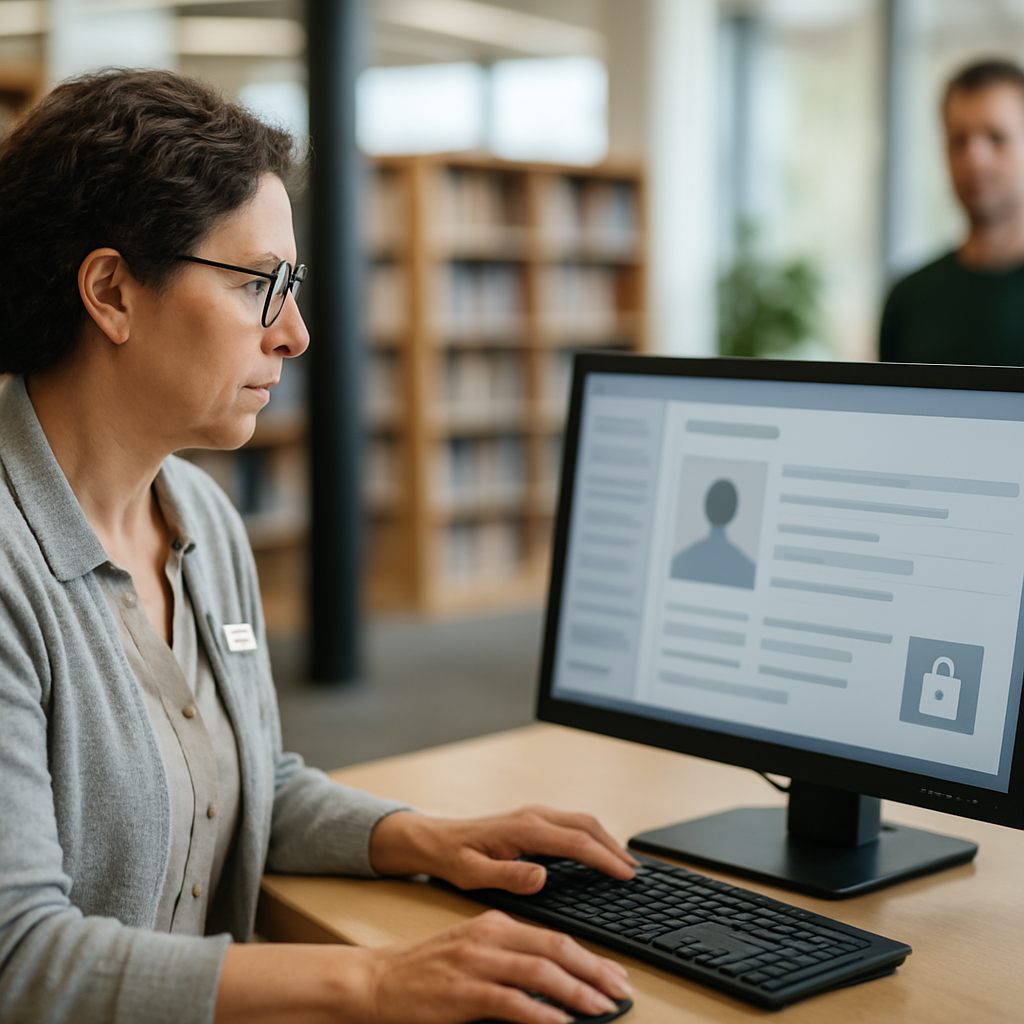
An effective library privacy policy should protect data while remaining usable. It gives people the access they need, removes it when circumstances change and makes exceptions visible. This approach cannot eliminate risk, but it can stop everyday convenience from becoming a weak point in the library’s defences.