
Borrowing to Fund Casino Play: Why Credit Is Different from Discretionary Spending
Introduction
With discretionary spending, the money leaves your account and the purchase is over. Borrowing to gamble is different. A wager may last seconds, but the debt can remain long after the result is known.
Credit can feel like money you have available to spend. In reality, it comes with a cost and a repayment schedule. Using it for casino play means taking on two uncertainties: the outcome of the game and the cost of carrying the debt.
This is not a comparison between gambling and every other leisure activity. It is a comparison between spending money set aside for a non-essential purchase and using money you must repay. One is a limited expense; the other can have consequences long after the original decision.
The players: borrower, lender and wager
When borrowing to gamble, a borrower makes a financial commitment before knowing whether the wager will pay off. A loss does not reduce the debt, and a win does not automatically cover interest, fees or scheduled payments.
The lender’s terms shape what happens next. A credit card balance, cash advance, overdraft or personal loan may come with different costs and repayment rules, depending on the product and the borrower’s circumstances. The amount available to borrow is not necessarily an amount the borrower can comfortably repay.
The wager carries its own uncertainty. Using credit does not improve the odds, and raising the next stake cannot undo a previous loss. Borrowing does, however, put more at risk beyond the game: future income, savings goals and the ability to pay ordinary bills.
The decision is quick, but its consequences can last. A bet takes seconds to place; repayment may take weeks or months. It is like taking a short-term tactical risk that requires a long recovery, with no guarantee the next play will make up for the last.
Key factors
First, consider the cost of time. Credit is rarely free. Interest and fees can raise the total cost of a gambling session, especially if the balance is not paid off promptly. The final cost is not just the amount wagered, but also the cost of borrowing it.
That cost can be easy to overlook in the moment. A person may focus on the stake and put off thinking about repayment. But payment dates remain fixed, regardless of the game’s outcome. They do not shift because a player had a losing night or expects to win next time.
Second, credit can obscure the limits of a cash budget. Spending money already set aside creates a visible ceiling: once it is gone, the session must stop unless the player deliberately moves more money from elsewhere. With credit, the limit can feel less clear because the cost may not register until the bill arrives.
This is not just a matter of discipline. Borrowing separates the experience of spending from its cost. The excitement happens now; the consequences come later. That gap can make it easier to spend more than intended, especially during a fast-moving session.
Third, debt can affect the next decision. After a loss, a borrower may feel pressure to win back both the stake and the money owed. This can lead to chasing losses: continuing or increasing bets in an attempt to reverse an earlier result.
Chasing is not a reliable way to recover money. It turns an uncertain activity into a response to financial stress, and each new wager brings another risk of loss. Credit can intensify the urge to keep playing by making a win seem like a solution to the debt, even though no outcome is guaranteed.
Fourth, repayments compete with other expenses. Money used to repay debt may no longer be available for rent, food, transport, savings or other commitments. The effect depends on a person’s finances and borrowing terms, but the trade-off is clear: repaying a gambling-related balance can limit future choices.
This is the key difference between a discretionary purchase and a credit-funded wager. A purchase within a set budget may mean giving up another treat. Debt can put pressure on essential expenses or future plans, even if the amount borrowed initially seemed manageable.
The match scenario
Imagine a player who sets a fixed entertainment budget and loses it. If the money was genuinely disposable, the loss is limited to the amount spent. The player may feel disappointed, but the loss itself creates no new repayment obligation.
Now imagine the player uses credit after the budget runs out. The game may end the same way, but the financial position has changed. The player has lost the money and now has a balance to repay, with possible extra costs if the debt carries over. Part of the next paycheque is already committed.
There is another possible outcome: the player borrows and wins, then takes that win as proof that borrowing was a good decision. But a favourable result does not remove the risk. The same approach could lead to a loss next time, while the credit terms still apply. Judging a decision by its immediate result confuses the outcome with the decision-making process.
The safest position is not one that relies on a late comeback. It is one where gambling money is set aside in advance and kept separate from borrowed funds and essential expenses. If a person cannot afford to lose the money without using credit or disrupting other obligations, they are not in a position to gamble safely.
Conclusion
Borrowing to fund casino play turns a short-lived wager into an ongoing financial obligation. Interest, repayment dates and pressure to recover losses can all last longer than the excitement of the session.
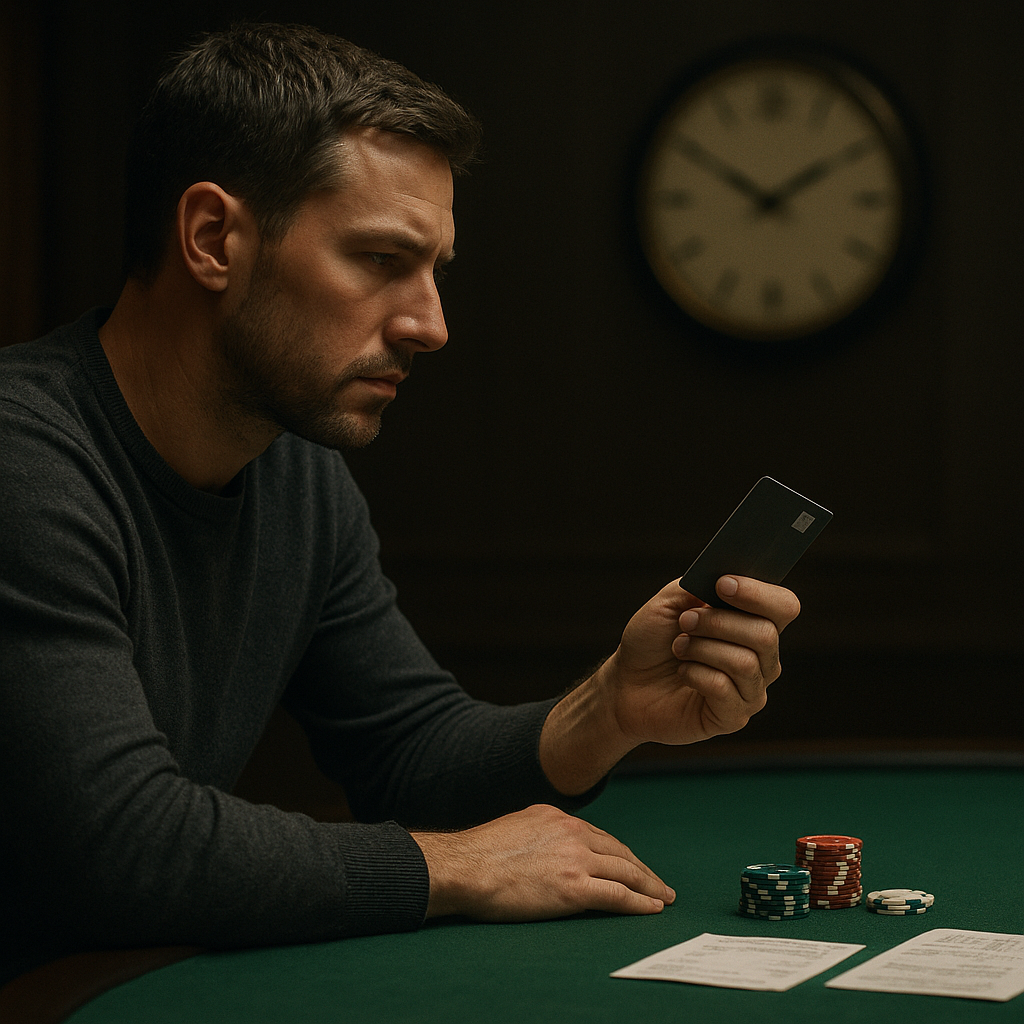
Credit does not change a game’s odds, but it does change the consequences of playing. Spending disposable money fixes the cost at the point of purchase. Borrowing adds another challenge—repayment—after the casino game is over.